Understanding Flexible Pouch Architecture
Modern flexible packaging replaces rigid metal cans, glass jars, and heavy plastic containers with multi-layer barrier laminates. Selecting the right pouch type depends on whether the product is solid, granular, powder, or liquid, along with required shelf visibility and filling equipment.
1. Stand-Up Pouches (Doypack)
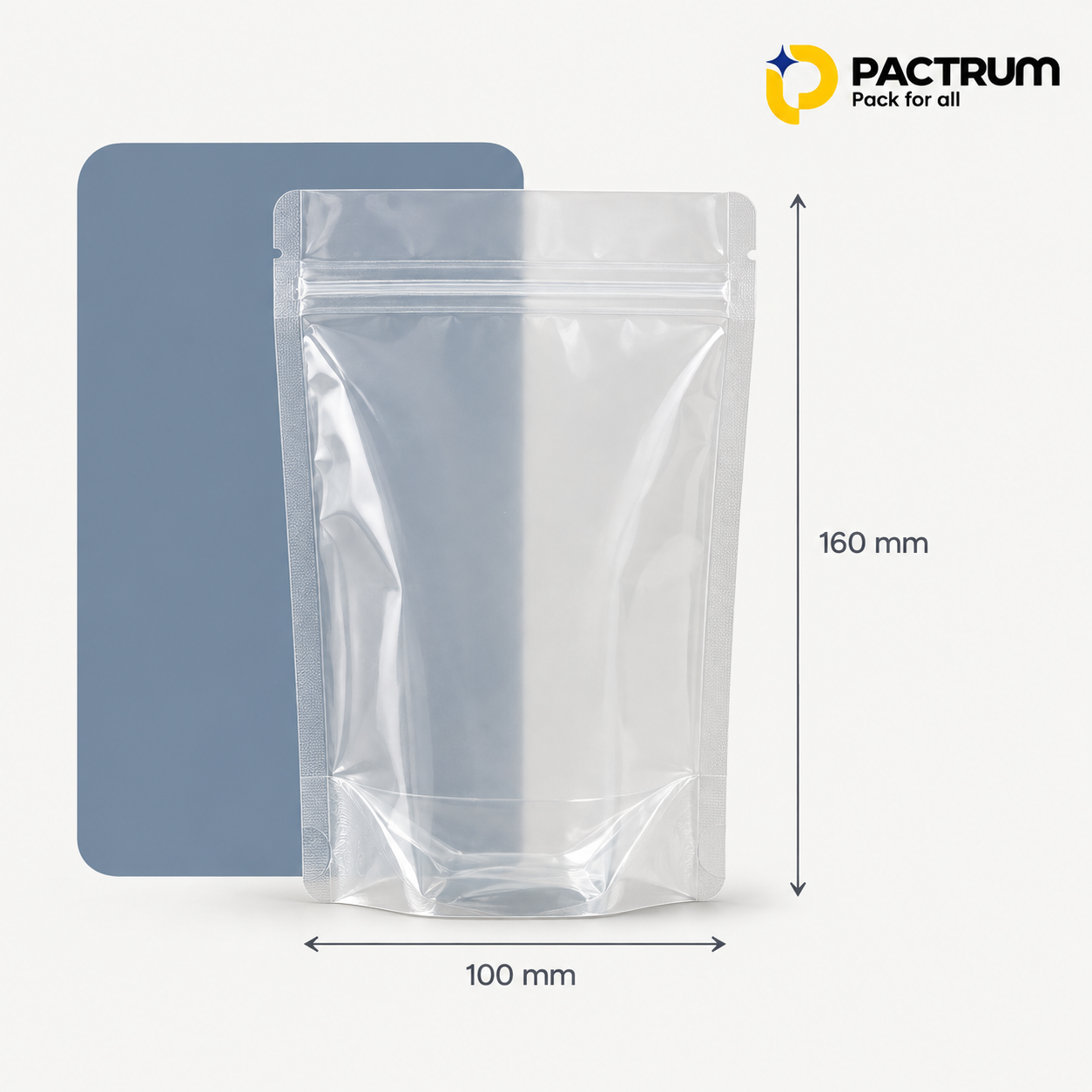
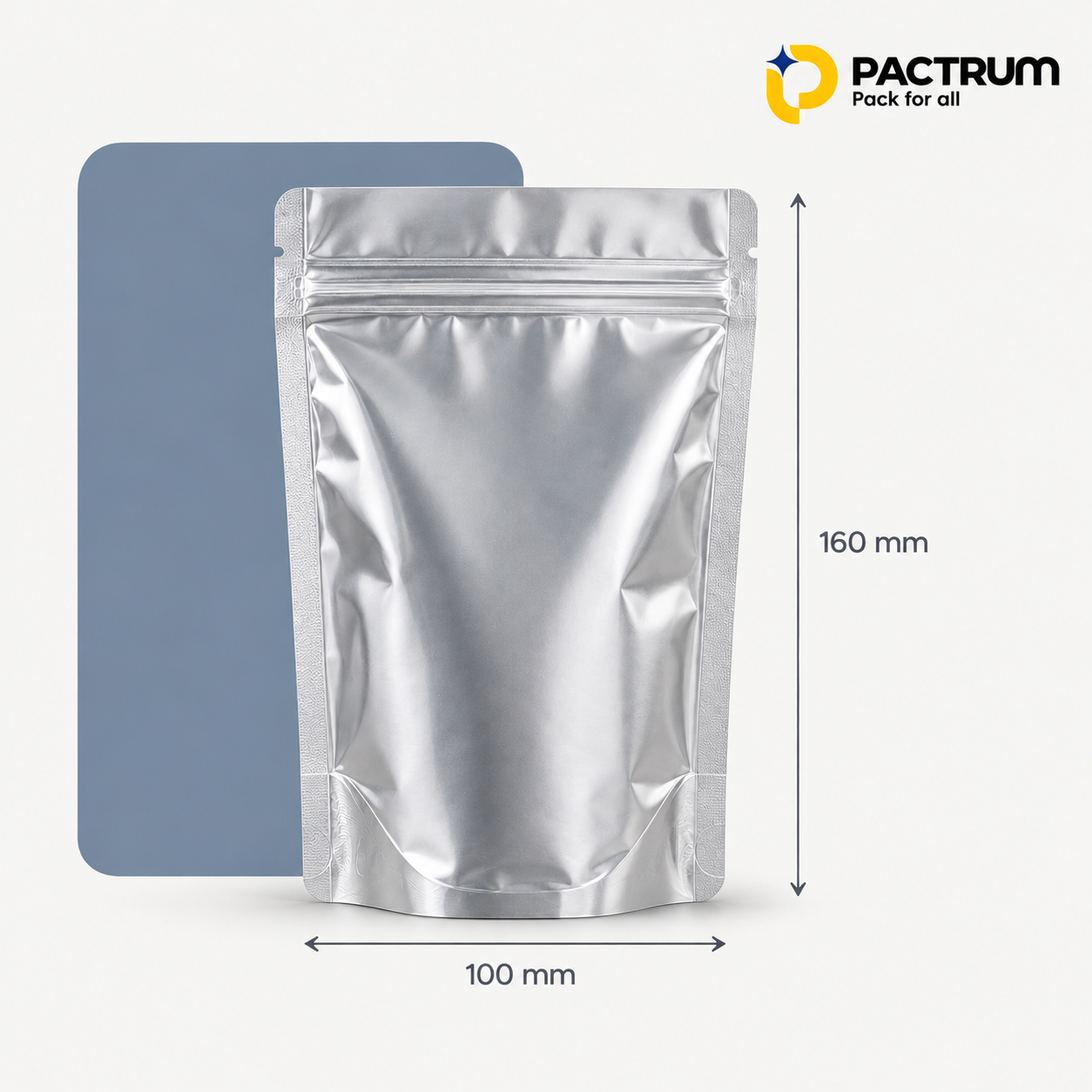
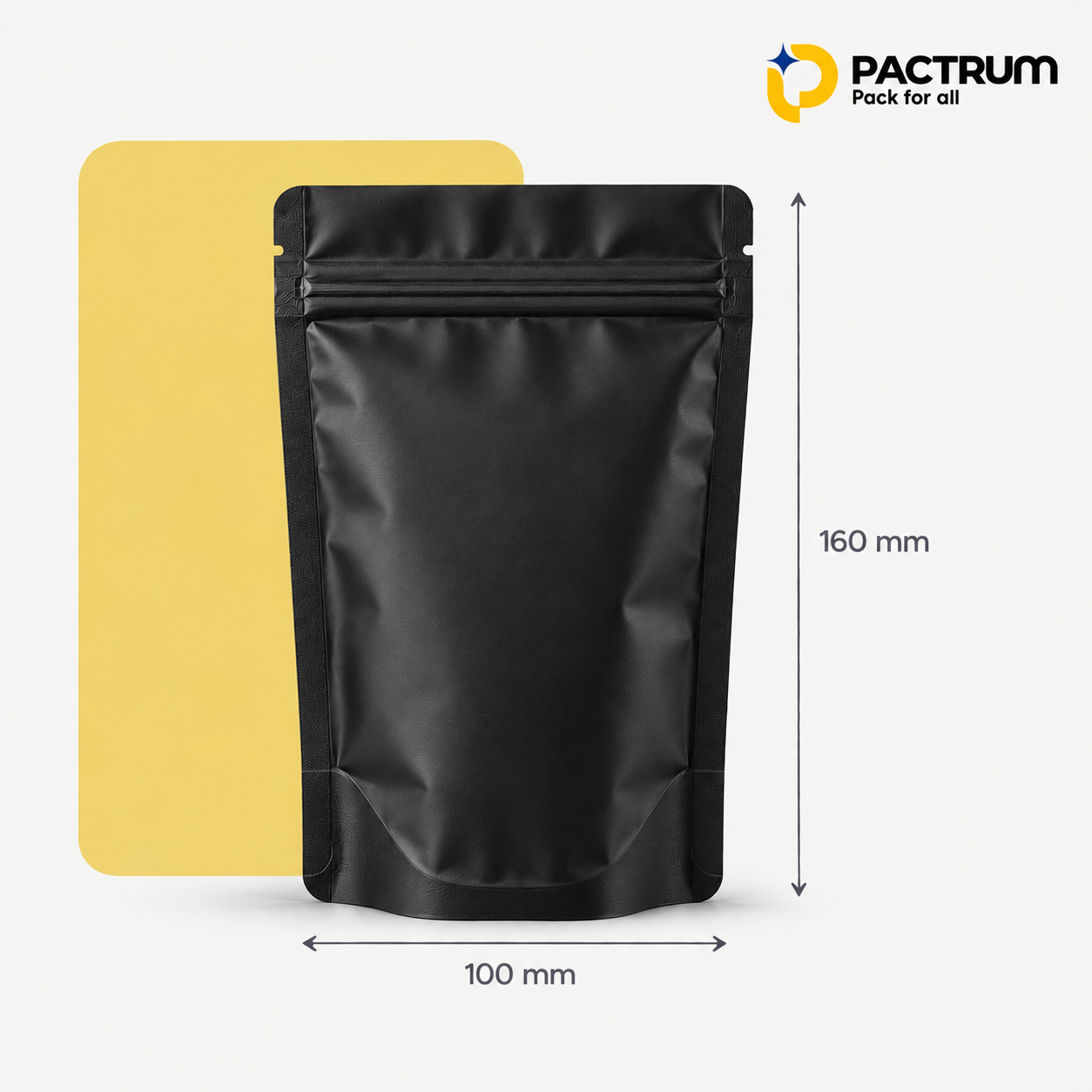
The Stand-Up Pouch is engineered with a continuous bottom gusset heat-sealed into the side walls. When product is filled, the gusset opens outward into an oval base that supports the entire package upright. In the Pactrum standardized range, all 40 stand-up pouch variants come equipped with integrated press-to-close zippers and V-cut tear notches.
2. Flat Bottom / 3D Box Pouches
Flat bottom pouches combine the standing profile of a pouch with the square footprint of a folding carton. Because all four vertical corners are sealed and the bottom panel is completely flat, the pouch does not tip forward or backward. This format offers 20% to 30% higher volumetric packing efficiency than equivalent stand-up bags.
3. Three-Side-Seal Pouches
Constructed by bonding three outer edges together and leaving one end open for filling, three-side-seal pouches provide a slim, flat package without expansion gussets. They are ideal for high-barrier protection where vertical shelf standing is not needed, such as vacuum-packed spices, medical kits, and sample sachets.
4. Spout Pouches
A spout pouch integrates a flexible barrier pouch body with an injection-molded rigid neck and threaded closure. By replacing heavy bottles, spout pouches decrease container freight weight by up to 70% while offering clean, reclosable liquid dispensing for beverages, edible oils, and household detergents.
5. Center Seal Pouches (Pillow Pouches)
Center seal bags are produced from a continuous roll of barrier film folded into a tube and sealed down the center back. They represent the packaging industry's standard for high-volume automated vertical packaging lines.